
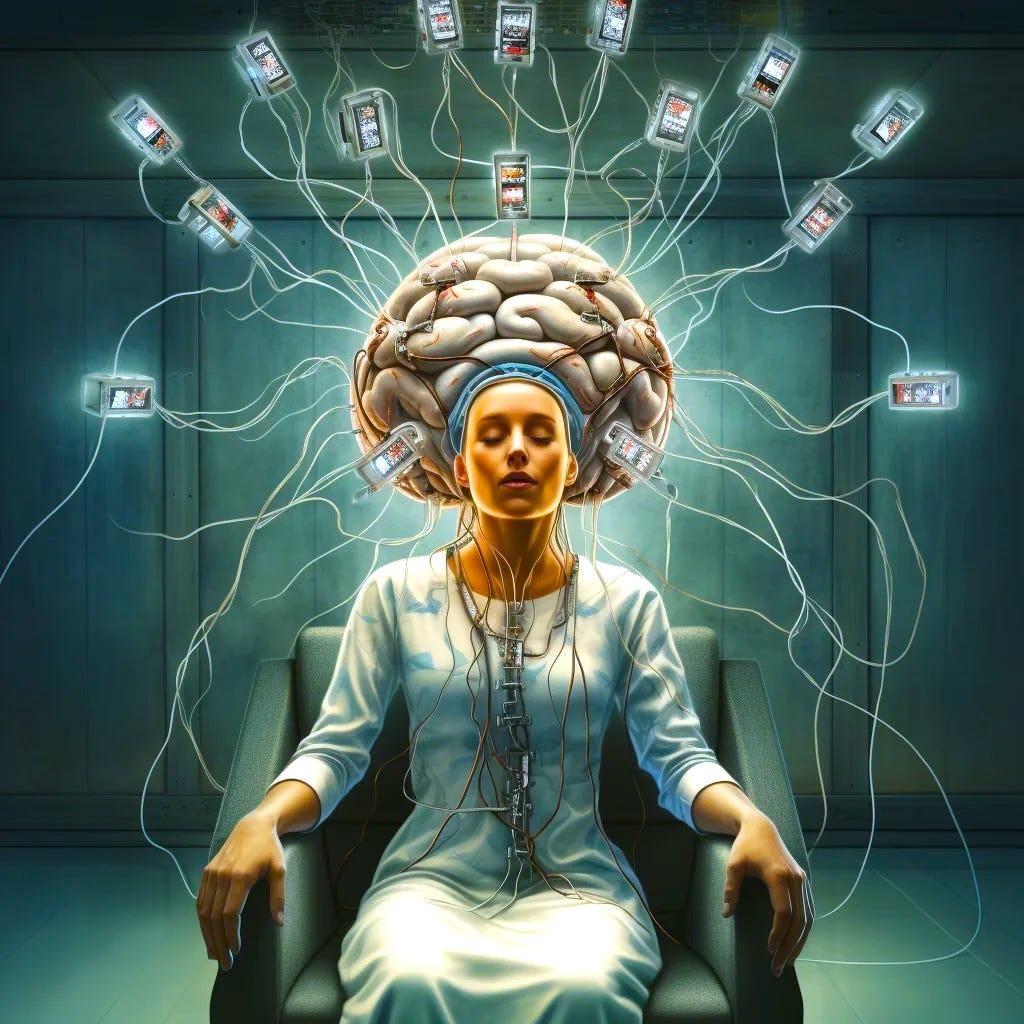
For decades, neuroscientists have known that human perception is not a passive process. Rather than simply recording external information, the brain continuously interprets, filters, and reconstructs sensory input. Increasing evidence now demonstrates that this reconstruction is heavily influenced by an individual’s state of mind—shifting subtly depending on emotional conditions, cognitive load, expectations, and prior experiences. As a result, the “reality” one perceives is a dynamic, subjective construction rather than an objective snapshot of the external world.
Perception as a Constructive Process
The notion that the brain actively constructs reality is supported by a wide range of neuroscientific studies. Contemporary theories, including predictive processing and Bayesian brain models, suggest that perception involves constant interaction between incoming sensory data and the brain’s internal predictions. These predictions are shaped by emotional states, memories, and learned associations.
Instead of functioning like a camera, the brain resembles a scientist forming hypotheses about the environment. It receives incomplete sensory signals, compares them to existing mental models, and selects the most plausible interpretation. Emotional context strongly influences which interpretation the brain favors.
“Perception is always a negotiation between the external world and the brain’s internal expectations,” explains cognitive neuroscientist Dr. Anil Seth. “What we perceive is, in many ways, a controlled hallucination constrained by sensory input.”
Emotional States as Perceptual Filters
A growing body of research demonstrates that emotions shape sensory processing in measurable ways. Brain regions involved in emotional regulation—including the amygdala, prefrontal cortex, and insula—interact with sensory cortices to influence how incoming information is interpreted.
Anxiety Heightens Threat Perception
Individuals experiencing anxiety tend to interpret ambiguous stimuli—such as facial expressions, tones of voice, or environmental cues—as threatening. Functional MRI studies reveal increased activation of the amygdala during anxious states, which biases the brain toward threat-related interpretations.
This heightened vigilance may have evolutionary roots. In uncertain environments, assuming the presence of danger can confer a survival advantage. However, in modern settings, such distortions can lead to misperceptions of social interactions, overestimation of risk, and chronic stress.
Positive Emotions Broaden Cognitive Scope
Conversely, positive emotional states are associated with enhanced cognitive flexibility and more holistic perception. Research by psychologist Barbara Fredrickson shows that positive emotions expand attentional scope, allowing individuals to notice a wider array of environmental details. Neuroimaging studies link these changes to increased activity in the prefrontal cortex, which supports reasoning and executive functions.
In this state, the brain is more likely to interpret ambiguous information in a benign or optimistic manner, demonstrating the powerful role of mood in shaping perceptual outcomes.
Stress and Cognitive Narrowing
Stress produces yet another set of perceptual distortions. During acute stress, the body releases cortisol and activates the sympathetic nervous system, shifting neural activity from higher-order reasoning centers toward more primitive survival circuits. This results in cognitive narrowing: a reduction in the ability to consider multiple perspectives or alternative interpretations.
Psychologist Daniel Kahneman describes this as a shift from slow, deliberate thinking (System 2) to fast, reactive thinking (System 1). Under stress, the brain favors rapid interpretation over accuracy, often privileging emotionally charged or survival-related information.
As a result, stressful states alter not only what individuals perceive but also how they evaluate and remember events.
Memory as a Dynamic Reconstruction
One of the most compelling demonstrations of the brain’s interpretive nature comes from memory research. Contrary to the popular belief that memories are stored as fixed recordings, decades of psychological studies show that memory is an active reconstruction influenced by current emotions, beliefs, and contextual information.
Each time a memory is recalled, it becomes susceptible to modification before being stored again—a process known as reconsolidation. Emotional states at the moment of recall can shift the tone or interpretation of past events. For example:
An individual experiencing sadness may recall neutral experiences as more negative.
A person in a positive mood may reinterpret past difficulties as meaningful or beneficial.
Stress can exaggerate the emotional intensity of negative memories.
Thus, one’s state of mind not only shapes the perception of present events but also subtly rewrites the past.
The Role of Cognitive Biases
State-dependent distortions of reality are reinforced by cognitive biases—systematic patterns of thinking that influence how information is interpreted. Confirmation bias, for instance, causes individuals to prioritize information that aligns with existing beliefs and disregard contradictory evidence. Emotional states strengthen these biases: anxiety amplifies attention to negative cues, while optimism enhances sensitivity to positive ones.
Expectations also play a significant role. Experimental research shows that when participants are primed with certain expectations—such as believing a task will be difficult or a person will be unfriendly—their perceptual systems adapt accordingly, often matching the expectation even when the external reality does not support it.
Predictive Processing: The Brain’s Internal Reality Engine
The predictive processing framework offers an overarching explanation for why and how the brain rewrites reality. According to this theory, the brain constantly generates predictions about incoming sensory input, attempting to minimize prediction errors—the difference between expected and actual signals.
Emotional states influence these predictions. For example:
Anxiety increases predictions of danger, leading ambiguous stimuli to be interpreted as threatening.
Confidence reduces perceived threat, making the environment appear safer.
Depression biases predictions toward negative outcomes, shaping perception accordingly.
In this view, reality is the result of a continuous feedback loop between prediction and sensation, with state of mind exerting strong influence over the predictive component.
Implications for Daily Life and Mental Health
Understanding how the brain reconstructs reality has far-reaching implications. It highlights the importance of emotional regulation, mindfulness, and metacognitive awareness—the ability to reflect on one’s own thinking.
Techniques such as cognitive-behavioral therapy (CBT) leverage this principle by teaching individuals to identify and challenge distorted interpretations. Mindfulness practices reduce activity in the amygdala and strengthen prefrontal control, improving perceptual accuracy during emotional states.
The insight also enhances empathy: recognizing that others may literally perceive the world differently based on their emotional and cognitive states can improve interpersonal understanding.
Conclusion
The emerging scientific consensus is clear: perception is not a direct reflection of the external world but a dynamic, state-dependent construction. Emotional conditions, stress levels, cognitive biases, and prior experiences continually influence how the brain interprets sensory information. As a result, individuals live not in a single shared reality but in personalized interpretations shaped by the shifting internal landscape of the mind.
Understanding this phenomenon not only advances our knowledge of human cognition but also emphasizes the importance of cultivating mental states that support clearer, more adaptive perceptions of the world.